
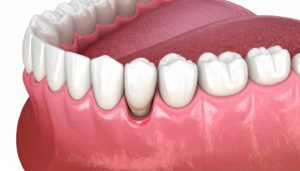
Gum disease affects millions of adults throughout the United States. While many remain unaware of their symptoms, certain signs indicate it’s time to see a trusted professional. Although bleeding and inflammation remain the most common, periodontal pockets also point to a more serious issue. What are these formations, and how can you prevent them? Keep reading to learn more.
What Are Periodontal Pockets?
Periodontal pockets are small gaps that form between your gums and teeth. The gingiva is supposed to remain tight, protecting the roots, bone, and other tissues, ensuring your pearly whites stay in place. However, when an infection forms, the tissue begins to detach from the root surface, allowing bacteria and food debris to become more easily trapped.
When plaque accumulates on your teeth and around the gumline, inflammation, bleeding, and tenderness occur. If left untreated, the infection can spread beneath the gums and attack the underlying bone, causing periodontal pockets to form.
How Can You Spot Them?
It often takes a dental hygienist, dentist, or periodontist to determine whether gum pockets exist, but some symptoms point to a serious problem, such as:
- Teeth that appear elongated (gum recession)
- Bad breath
- Loose teeth
- Bleeding, inflamed, and tender gums
- A change in your bite
- Painful chewing
What Can Your Periodontist Do to Treat These Pockets?
To determine if you have periodontal pockets that require treatment, a dental hygienist will use a small probe to measure their depth. According to the National Institutes of Dental and Cranial Research, periodontal disease is present if “at least one pocket measures 4 millimeters or more with 3+ millimeters of attachment loss.”
If you discover that you have periodontal pockets, you will need to undergo gum disease treatment to restore your oral health. This requires your dentist or periodontist to evaluate the severity and prepare a plan. This may include scaling and root planing, laser dentistry, antibiotic therapy, gum grafting, or periodontal pocket reduction. This latter option removes bacteria and tartar from the roots, thereby reducing pocket depth and encouraging reattachment to teeth.
How Can You Prevent Periodontal Pockets From Forming?
To avoid this process and to keep your smile healthy, you can prevent periodontal pockets from forming as long as you:
- Brush your teeth twice daily for two minutes, being careful to clean around the gumline.
- Floss at least once a day.
- Replace your toothbrush every 3-4 months.
- Maintain your biannual dental checkups and cleanings with your dentist.
By improving your oral hygiene routine and staying on top of your dental visits, you can enjoy healthier gums that help protect your teeth year after year.
About the Author
Dr. Maria Galvin is a periodontist in Torrance and a Diplomat of the American Board of Periodontology. Expertly trained to treat patients with early and late-stage gum disease, she and our team at Blue Coast Dental incorporate a range of treatment options, including laser dentistry, to address infected tissues and improve overall gum health. If you are suffering from bleeding or inflamed gums, visit our website or call (310) 424–3100 to schedule an appointment.