
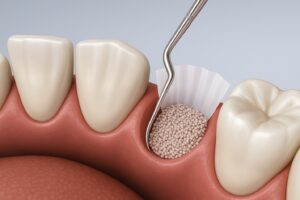
Dental implants are a worthwhile investment for anyone missing one or more teeth. Once positioned, they can last for decades, allowing patients to enjoy life in a new, exciting way. But before placement, the jawbone must be sufficiently dense to provide adequate support. If it is not, a bone graft is required. Read on to learn how this procedure works and what recovery will be like so that you can go on to receive your dental implants.
What is a Bone Graft?
A bone graft is a specialized procedure required when a patient lacks sufficient bone density. Dental implants need a stable foundation to support their custom restoration. If the underlying bone is not sturdy, a dental implant can fail.
However, with a bone graft, your oral surgeon can use bone tissues from your body (ribs, hips, wrist, etc.) or from a deceased donor and integrate them with any remaining bone within the vacant socket. Over time, the two work together to rebuild and stabilize the area.
What is the Recovery Process Like?
After your bone graft, you can expect the integration process to take a few months, but the procedural healing time should be about 1-2 weeks. This varies from patient to patient.
You can expect your gums to be slightly sore afterward due to the small incision made to place the grafting material. Fortunately, over-the-counter anti-inflammatory medication is often enough to minimize swelling and discomfort. You can also use a cold compress.
Once you are home, you will need to follow a few aftercare instructions to ensure you heal successfully:
- Do not be alarmed by any bruising or swelling, as this is normal.
- Avoid chewing on the side of your mouth with the surgical site.
- Stay away from hard, sticky, spicy, salty, and hot foods.
- Eat a soft food diet (yogurt, mashed potatoes, cooked vegetables, pasta).
- Avoid unhealthy habits, such as smoking, as this can slow down your recovery time.
Your doctor will want to ensure that you are fully healed from your bone graft before moving forward with dental implant surgery. While this will add a few months to your total timeframe for receiving a brand-new smile, it will be worth it when you see and experience the life-changing results.
About the Author
Dr. Pedram Marhabi is an oral surgeon with more than 15 years of experience. Earning his specialty certificate in oral and maxillofacial surgery from Harbor-UCLA Medical Center, he has continued to deliver long-lasting results to patients at Blue Coast Dental. When individuals want dental implants but lack sufficient jawbone density, he can provide bone grafting to ensure successful implant placement. Visit our website or call (310) 424–3100 to schedule an appointment.